

A mighty Tyrannosaurus-rex roars amid the ruins of the Jurassic Park Visitor Center. As terrified people run for their lives, a banner floats to the ground…
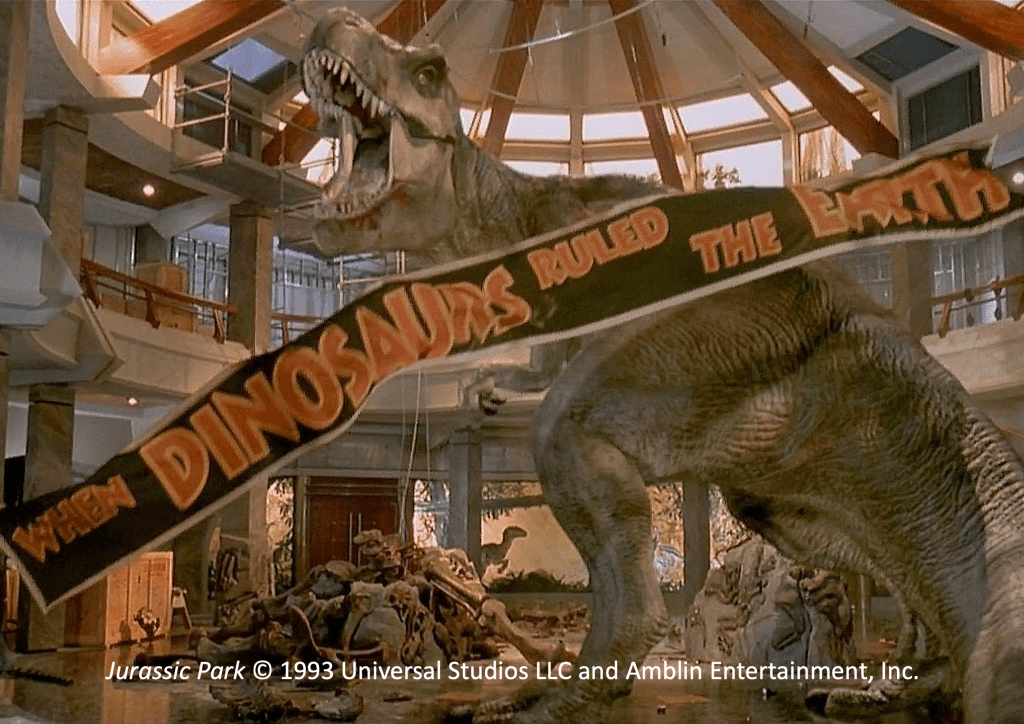
The slogan implies that dinosaurs ruled the earth millions of years before man. This is the dominant evolutionary narrative, parroted throughout the Jurassic Park movie franchise.

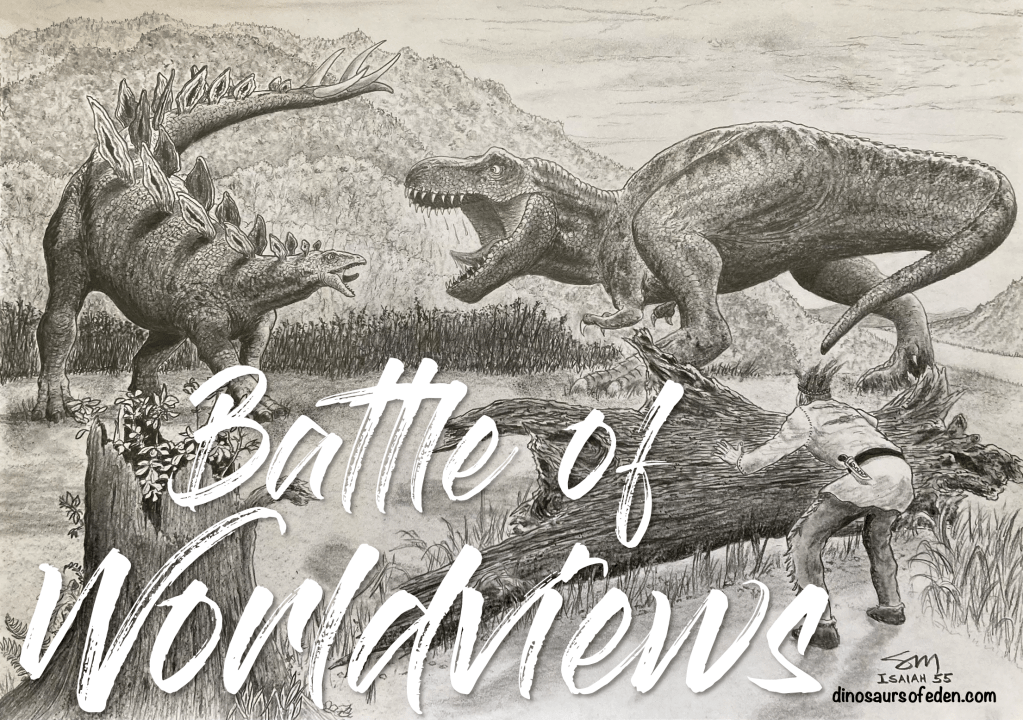
But what if dinosaurs and man actually coexisted in the past? It may seem absurd at first, given the danger some of the larger carnivores would pose (a full grown T-rex, for example, weighed as much as an African elephant).
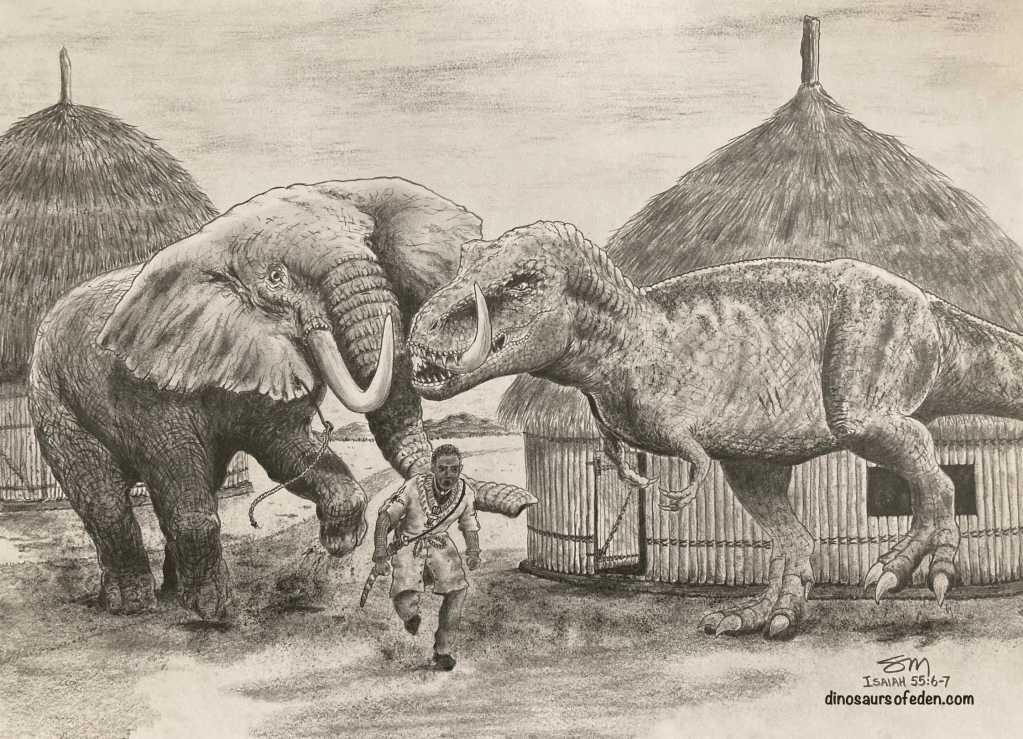
However, coexistence in time does not necessarily mean coexistence in the same habitat (consider Africa, where humans coexist with a variety of potentially dangerous animals).

The truth is, there are many scientists who disagree on exactly when dinosaurs roamed the earth. Many reject the idea that they lived “millions of years ago”, and there is compelling scientific and historical evidence that challenges the evolutionary narrative…


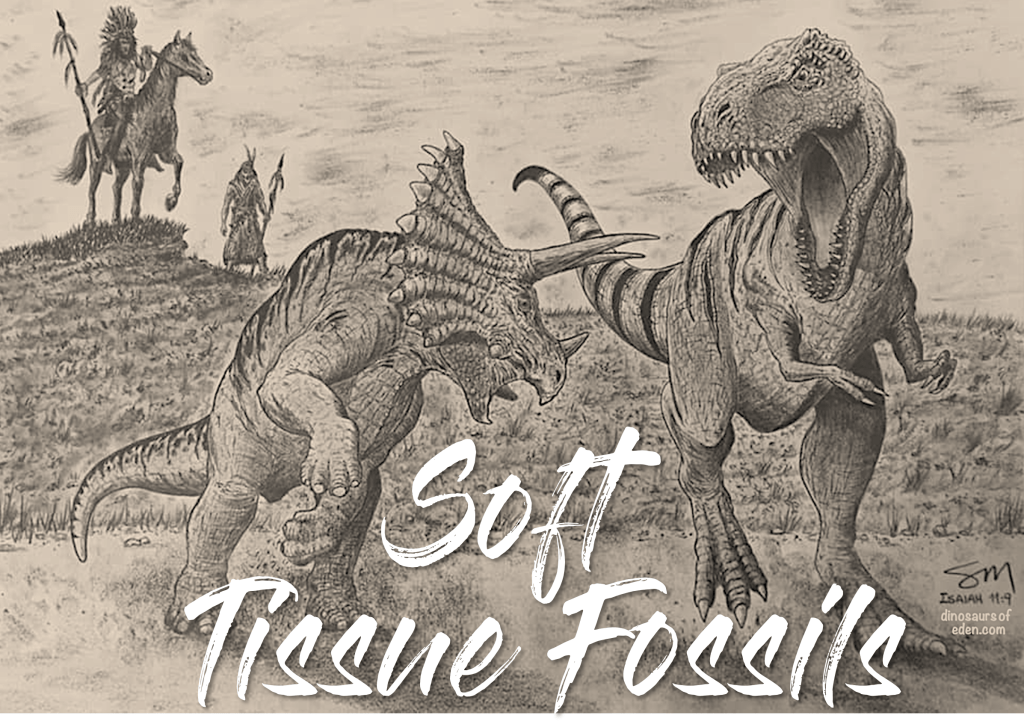
In recent years the scientific community has been rocked by the discovery of soft-tissue fossils containing red blood cells, blood vessels, and flexible ligaments, challenging the “millions of years ago” narrative and reigniting the debate over origins (creation vs. evolution). For example:
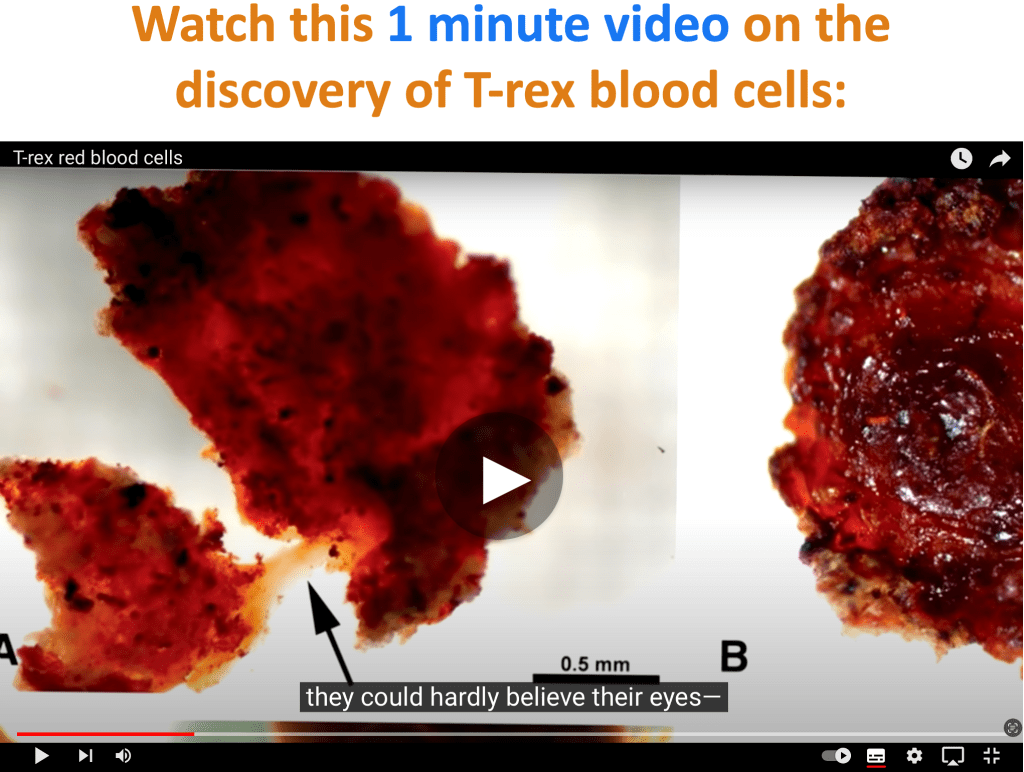
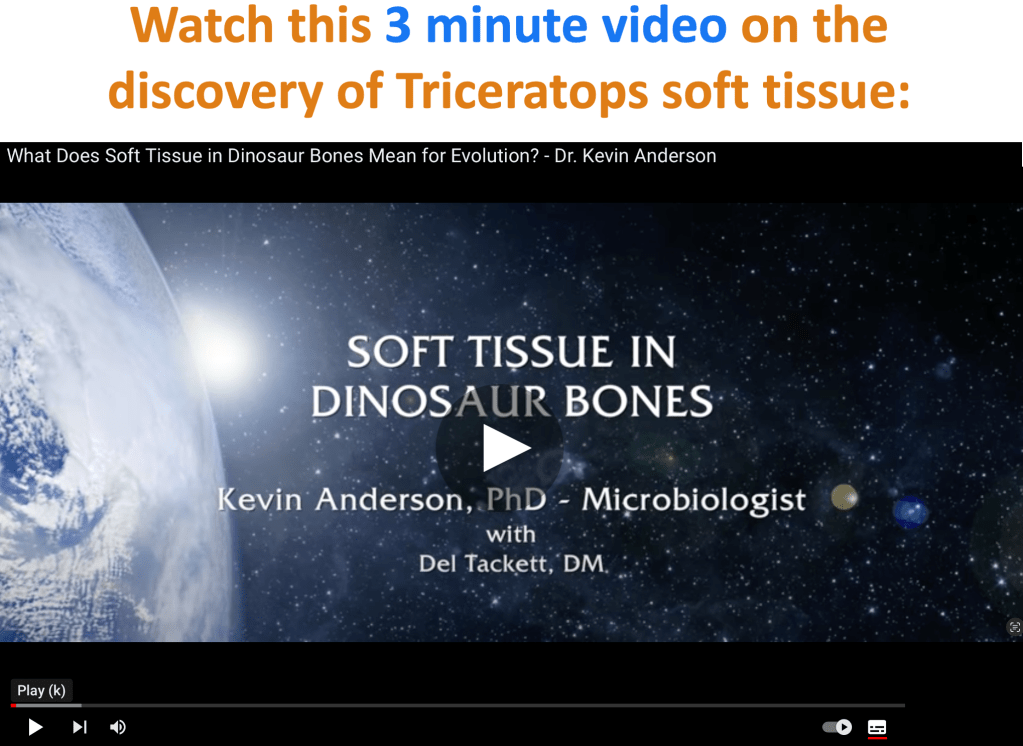
If we are presented with evidence that challenges the evolutionary paradigm, then according to the scientific method shouldn’t we be open to exploring alternatives?
Such evidence may include rock layers forming rapidly (if rock layers don’t have to be millions of years old, then neither do the fossils found in them) or fossils of dinosaurs with modern birds (if dinosaurs evolved into birds, as evolutionists claim, then why are their fossils found together?)
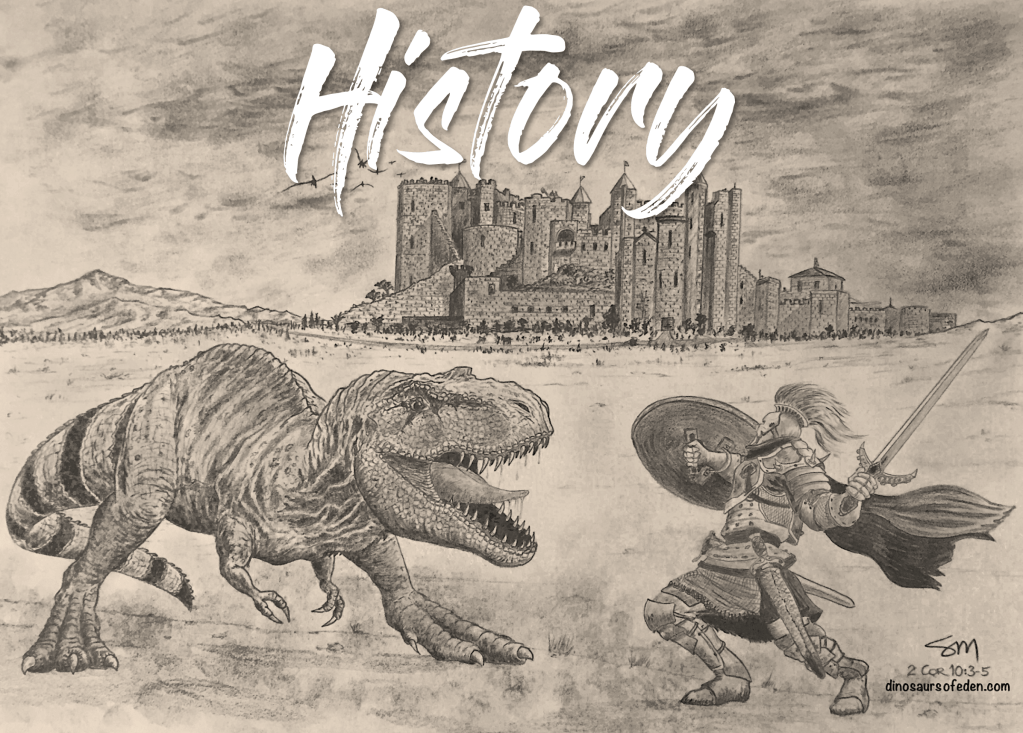
Ancient historical records also pose a challenge to the idea that dinosaurs lived “millions of years ago”. For example, could the Bible be describing dinosaurs in Job 40 and Job 41? Could Isaiah 14:29 (CEV) refer to a type of pterosaur?
Dragon legends are found in cultures all over the world, and many ancient artifacts, sculptures, carvings and drawings seem to depict dinosaur-like creatures. Here are some intriguing examples:
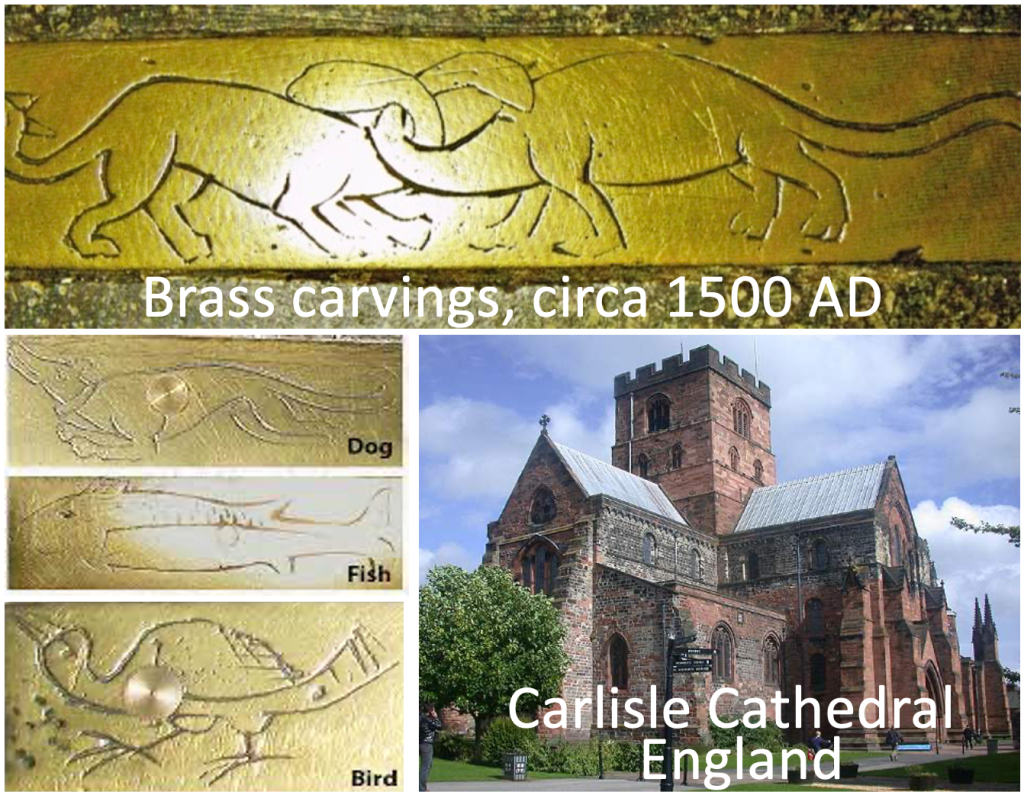
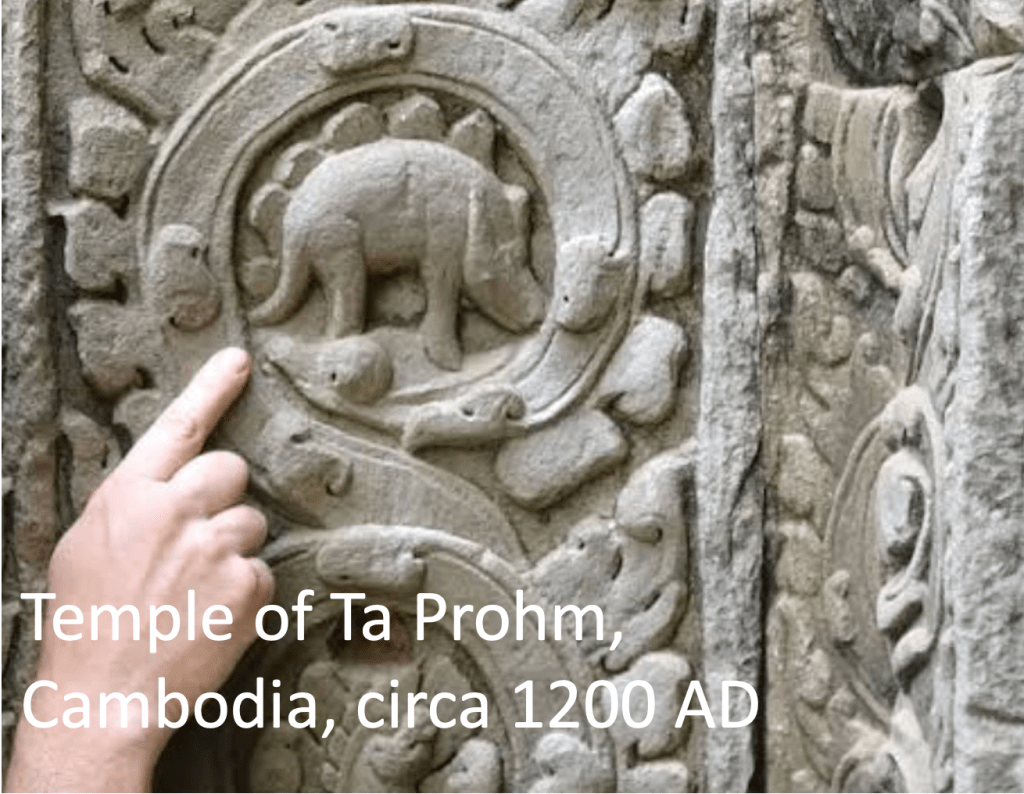

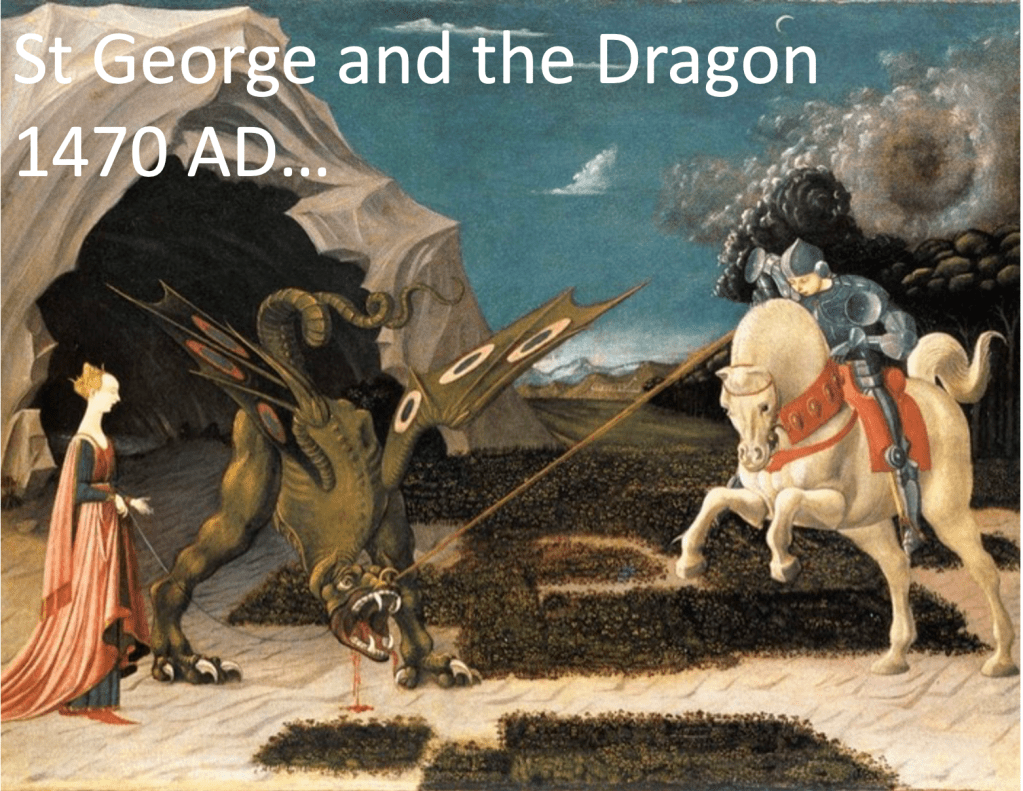
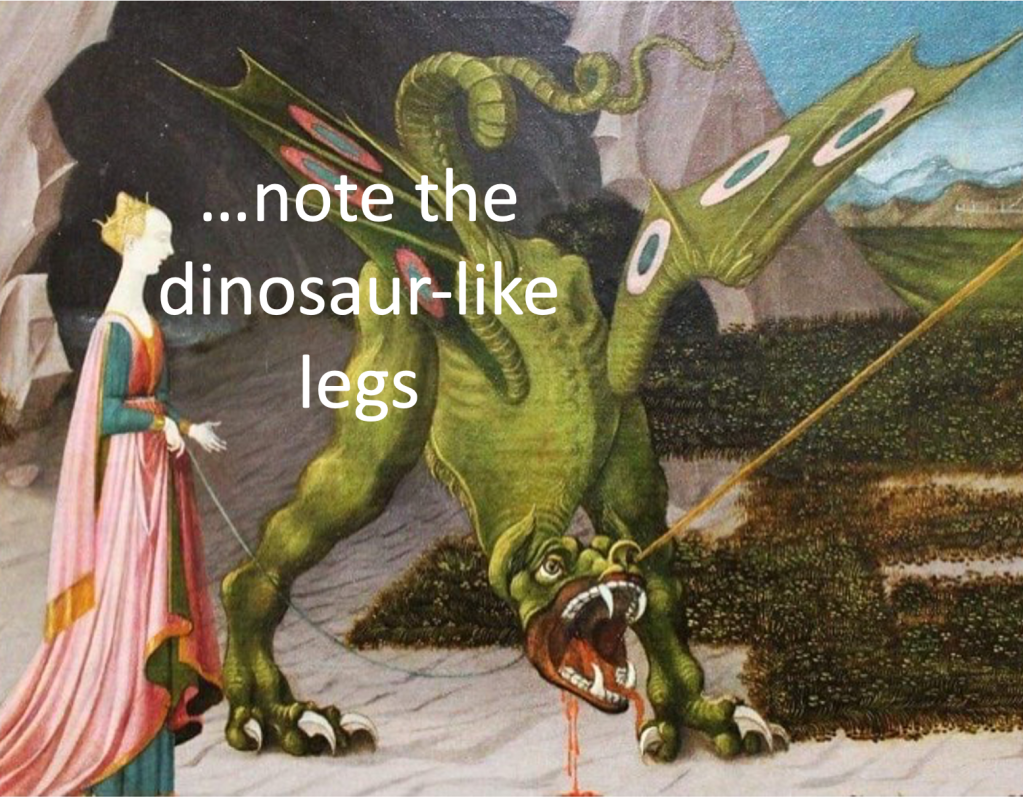
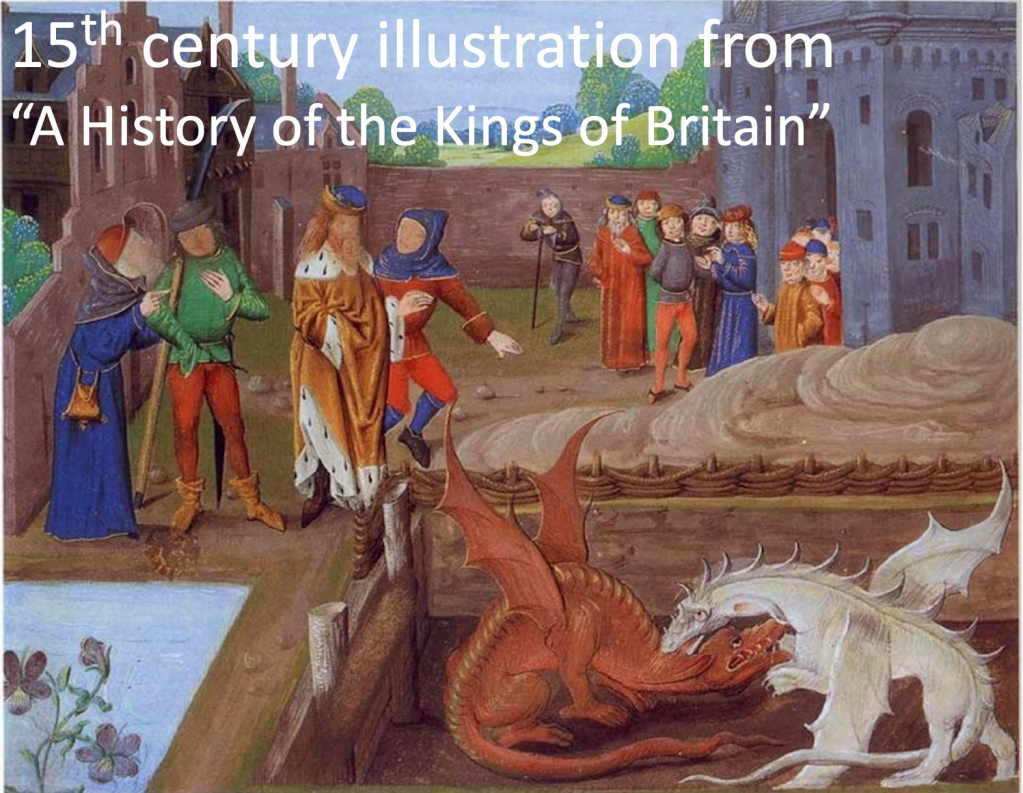




While some historical accounts of dragon encounters have become exaggerated over time, the fact remains that dragons bear a startling resemblance to dinosaurs.

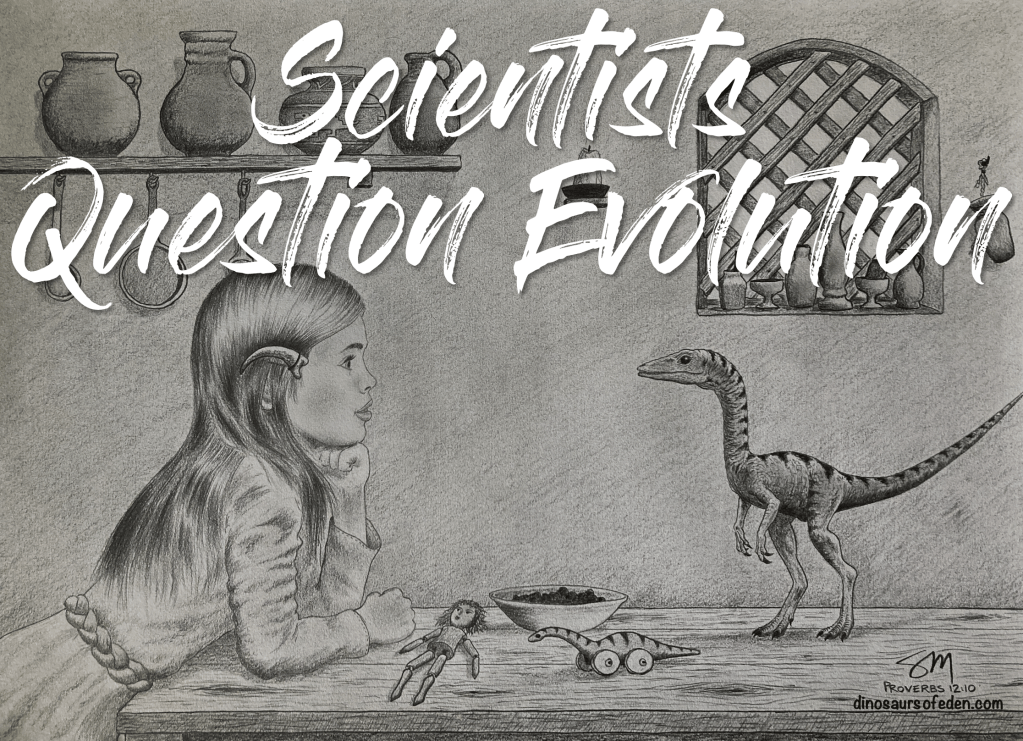
While natural selection (genetic information loss) and mutations (genetic information corruption) are observed in the real world, “evolution” (a belief in genetic information gain over millions of years) is contested by a growing number of scientists.
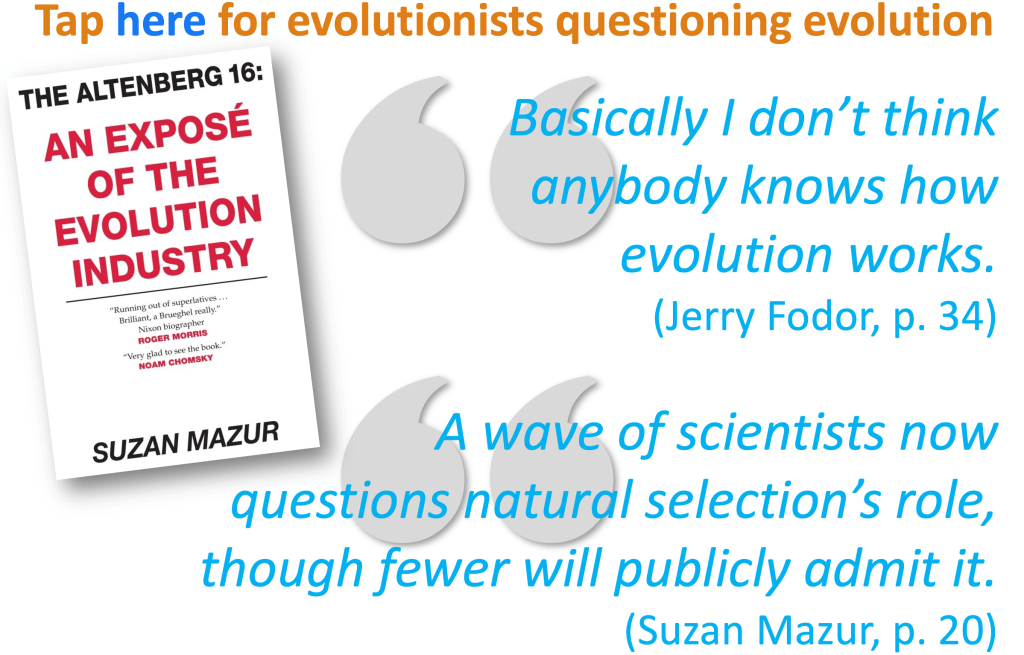
In The Altenberg 16, journalist Suzan Mazur (herself an evolutionist) shares some surprising admissions from fellow evolutionists. Tap on the book for an extensive list of candid quotes:
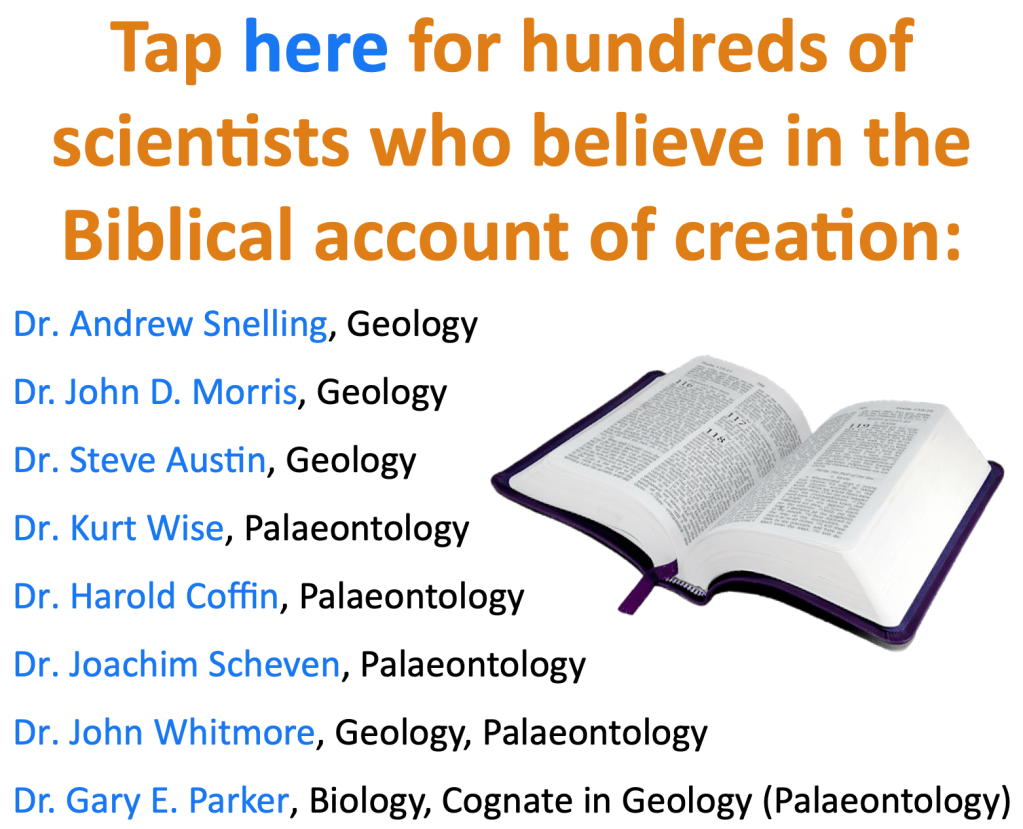
In fact, well over 1,000 PhD scientists have gone on public record to voice their dissension from Darwinian theory:
Evolutionists who reject the idea that dinosaurs evolved into birds include paleornithologists Alan Feduccia and Larry Martin. The late evolutionist Storrs Olson charged National Geographic with “sensationalistic, unsubstantiated, tabloid journalism” for suggesting that T-rex had feathers. Other evolutionists who dissent from the idea include the late Theagarten Lingham-Soliar and John Ruben.
And there are many more. As Michael Crichton noted at the end of his novel The Lost World: Jurassic Park, “nearly all positions on evolution remain strongly contended, and fiercely debated.”

In the movie Jurassic World: Dominion, Dr Alan Grant makes an observation that is typical of many real-world scientists:
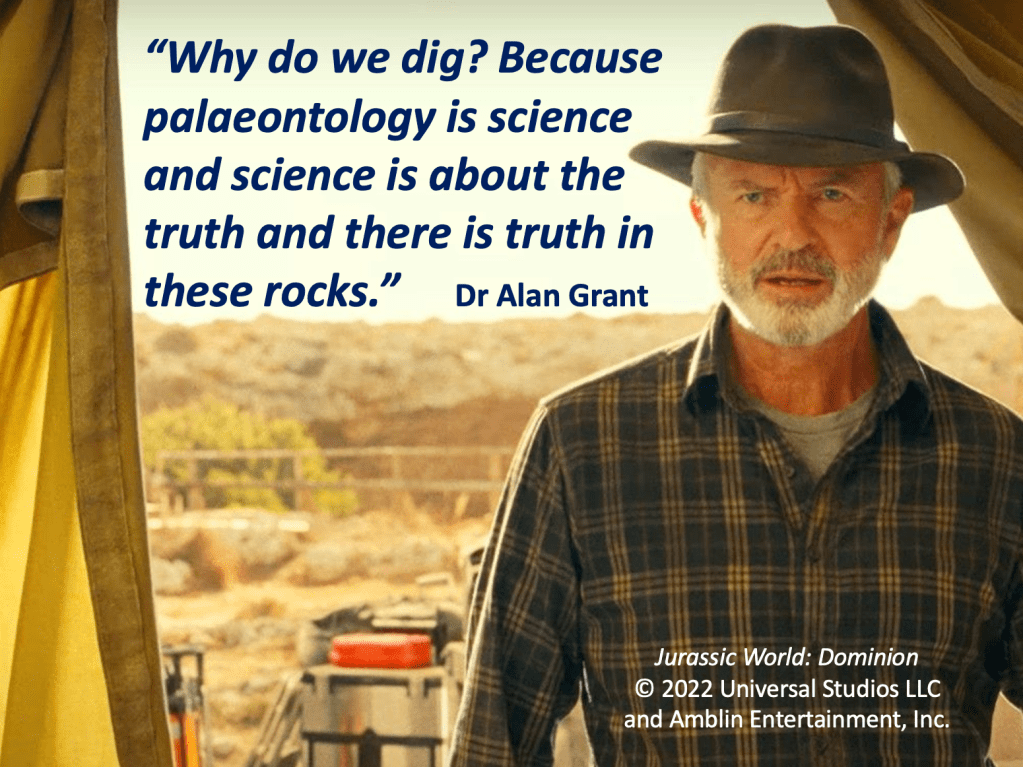
What this quote fails to take into account is that scientists on both sides of the debate (1) have the same evidence to work with — the same fossils and the same rock layers — and (2) have to interpret this same evidence within the context of their respective worldviews.
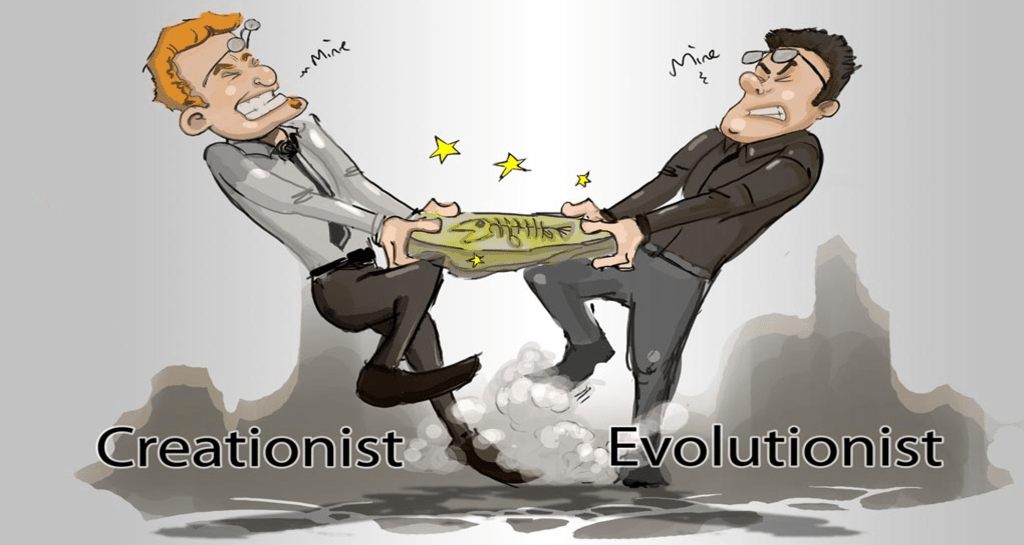
Some view this debate as a battle between religion and science, and reject religion because it entails believing in miracles. However, everyone has to believe in miracles — even evolutionists!
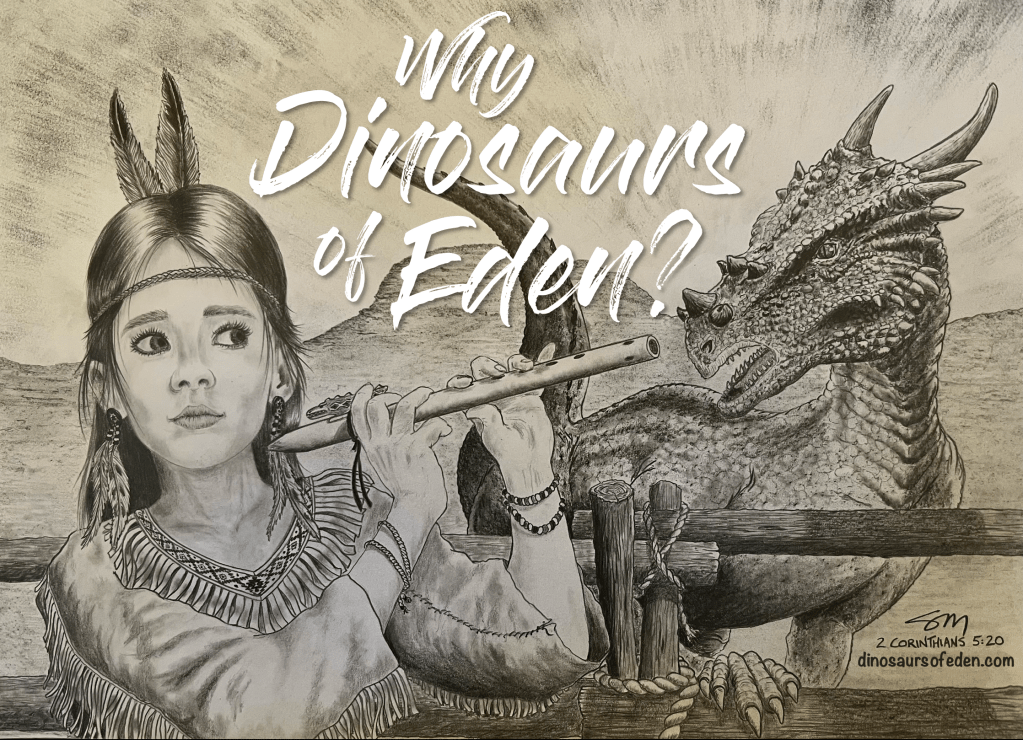
The late evolutionist Carl Sagan was so troubled by the resemblance between dinosaurs and dragons that he wrote a book — The Dragons of Eden — to try to explain it away.
By contrast, Dinosaurs of Eden takes the scientific and historical evidence at face value and argues that:
(1) It poses a serious challenge to the “millions of years ago” dogma;
(2) It is consistent with a young earth as described in the Bible.
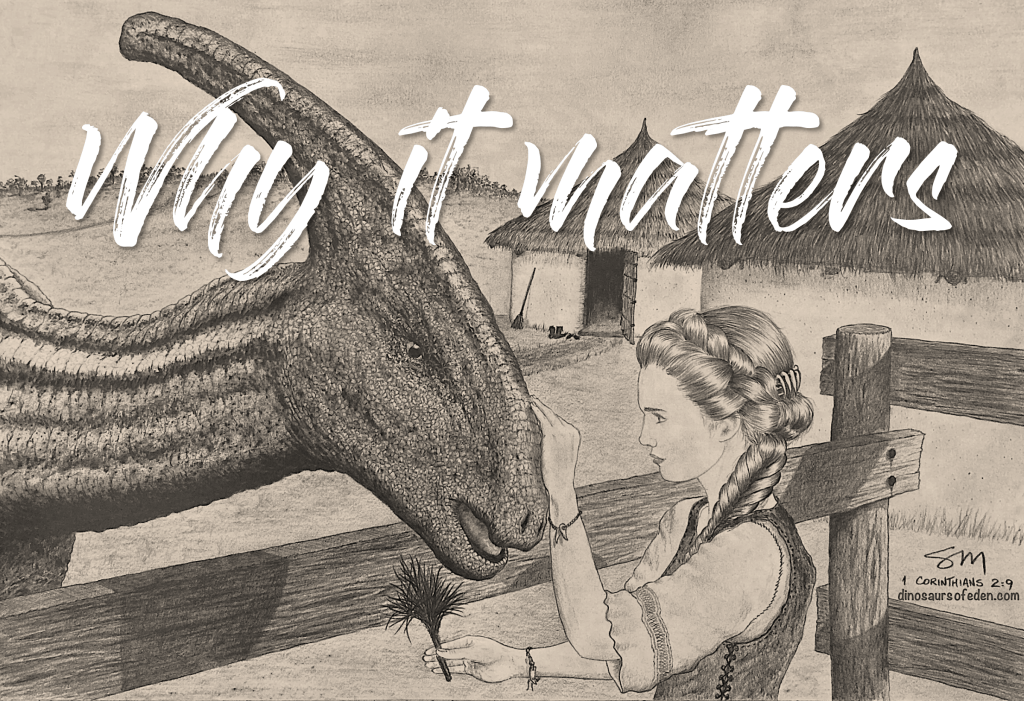
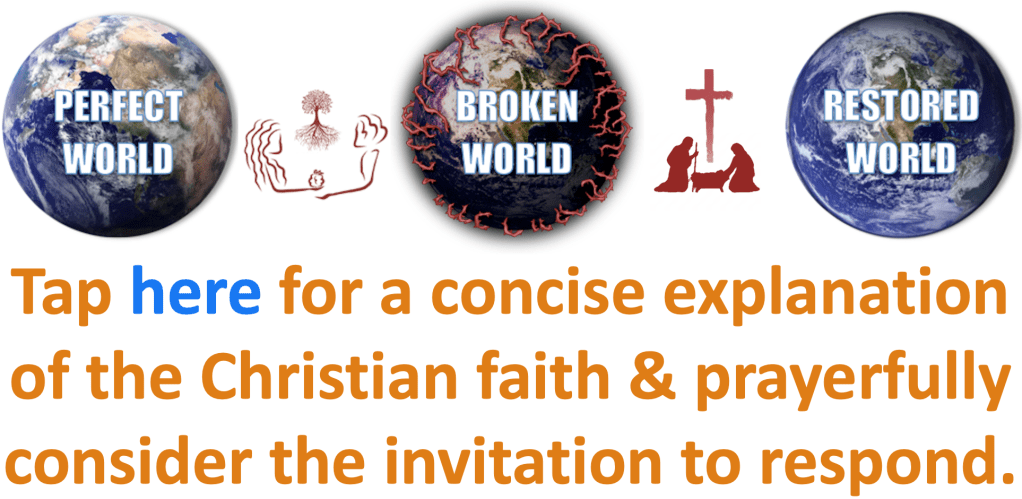
The problem with the “millions of years ago” narrative is that it undermines the central message of the Bible, which is founded upon a good God creating an originally PERFECT WORLD without millions of years of death and “evolution“.
The world we live in today is a BROKEN WORLD, the consequence of Adam and Eve’s rebellion. There is still beauty, but it is marred by sin, death, and suffering.
The timeline graphic below puts our broken world into a “big picture” context and sums up the Bible’s message of hope for a RESTORED WORLD:

Death originated with the rebellion of the first people (Genesis 3; Romans 5:12). But if we try to add millions of years of death and suffering and evolution to this timeline, then the Bible’s PERFECT WORLD foundation breaks down.
Consider this illustration of Adam and Eve in the Garden of Eden:
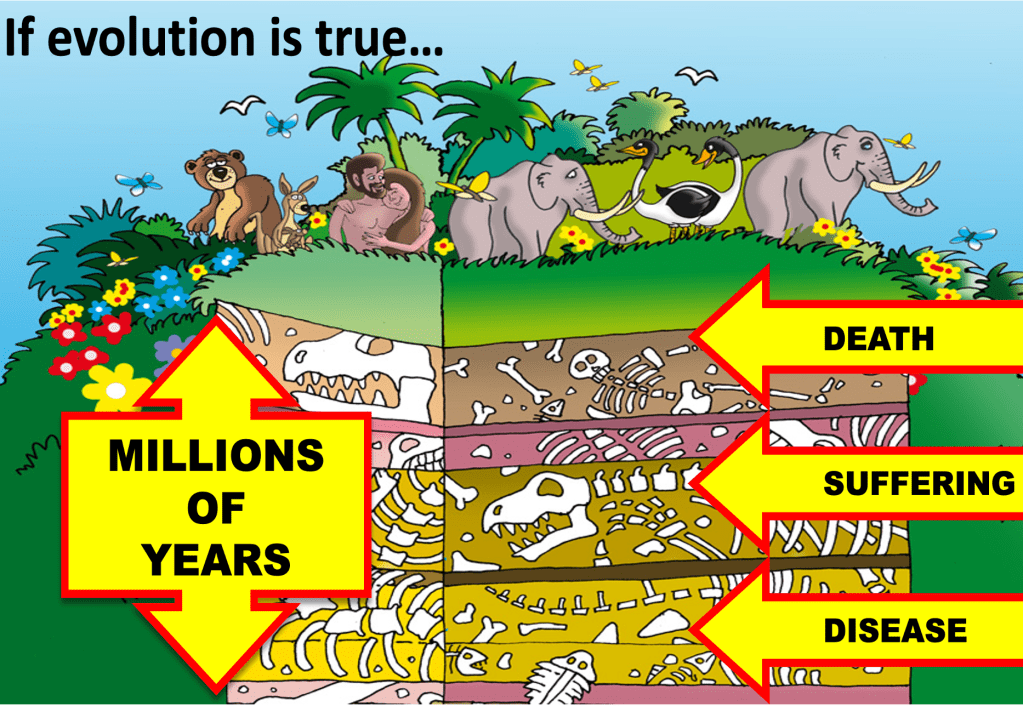
If the Garden of Eden was in fact a fossil graveyard, why was it called “very good” (Genesis 1:31)? And would a good God really create a world of death and suffering? Far from supporting evolutionary theory, the fossil record and geological formations are more consistent with the global Flood recorded in Genesis 6—8.
Some may question an originally perfect creation given that certain animals appear to be designed to kill and eat each other. However, God created every animal with a vegetarian diet (Genesis 1:30).
How do dinosaurs fit with that scenario? Could Tyrannosaurs have originally been plant eaters? The idea seems absurd when we’re conditioned to associate sharp teeth and claws with meat-eaters. However, even secular scientists, despite their flawed evolutionary assumptions, have no problem with the idea. For example, tap on the image below for the full article:

Clearly, animals classified as carnivores do not necessarily have to be so. And there are many more examples. Tap on the links to meet Little Tyke, the lion that wouldn’t eat meat. See tigers raised with pigs, and the lion that adopted a baby antelope. And meet Florence, the salad-eating shark…
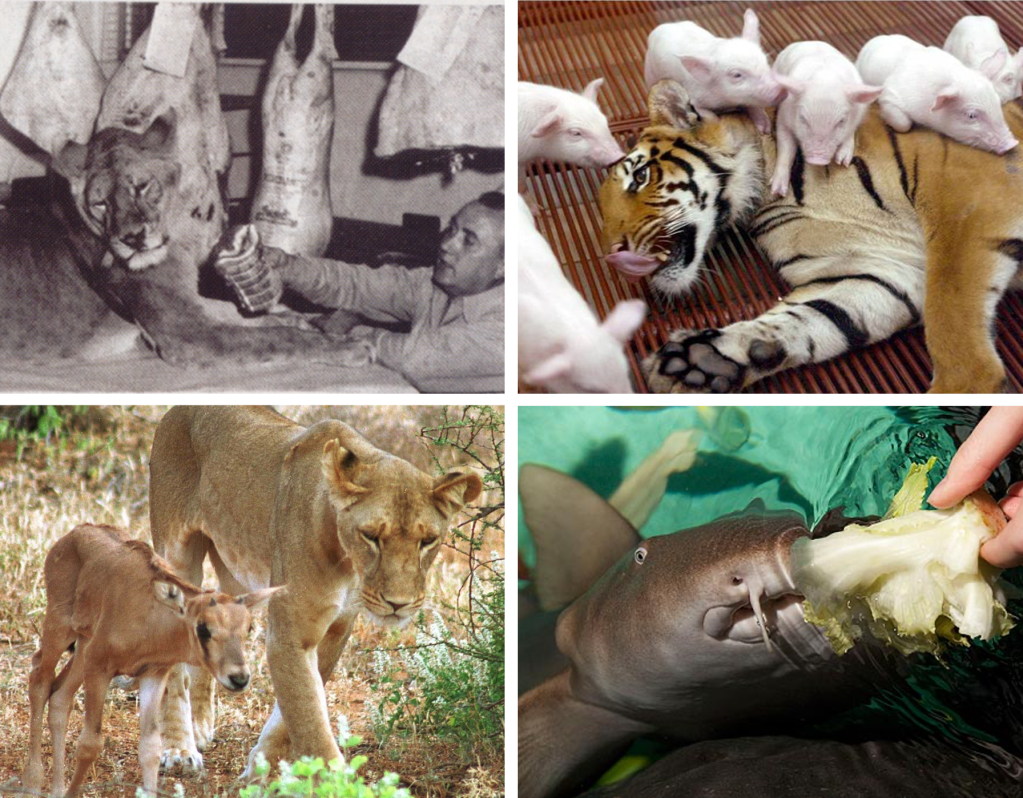
According to the Bible, since the original diet of animals was vegetarian, and since death only entered the world after Adam sinned, creatures that are now carnivorous could only have become so at some later point in a broken world.

The vampire finch is just one example of how even today some creatures are observed to undergo a radical change in their diet.

The original dinosaur kinds, then, were created alongside all other land animals and man, existing on a plant-based diet in a PERFECT WORLD (Genesis 1:25-31). Like most other animals, they eventually became extinct in a BROKEN WORLD.
Will dinosaurs dwell with man once more in a RESTORED WORLD? Psalm 104 hints at an answer, referencing a range of animals — including the Leviathan — that will one day be recreated when God “renews the face of the earth” (verse 30).
As the apostle Paul wrote, “No eye has seen, no ear has heard, no mind has conceived what God has prepared for those who love him…” (1 Cor 2:9).
In his book The Blind Watchmaker, evolutionist Richard Dawkins claimed, “The universe we observe has precisely the properties we should expect if there is at bottom no design, no purpose, no evil and no good, nothing but blind pitiless indifference“ (p. 133).
Nothing could be further from the truth! The evidence for creation is clear (Romans 1:18-20). We are not the product of blind evolutionary forces — we are wonderfully created in the image of God, and every human life is precious to him (Genesis 1:27; Psalm 139:13-16).


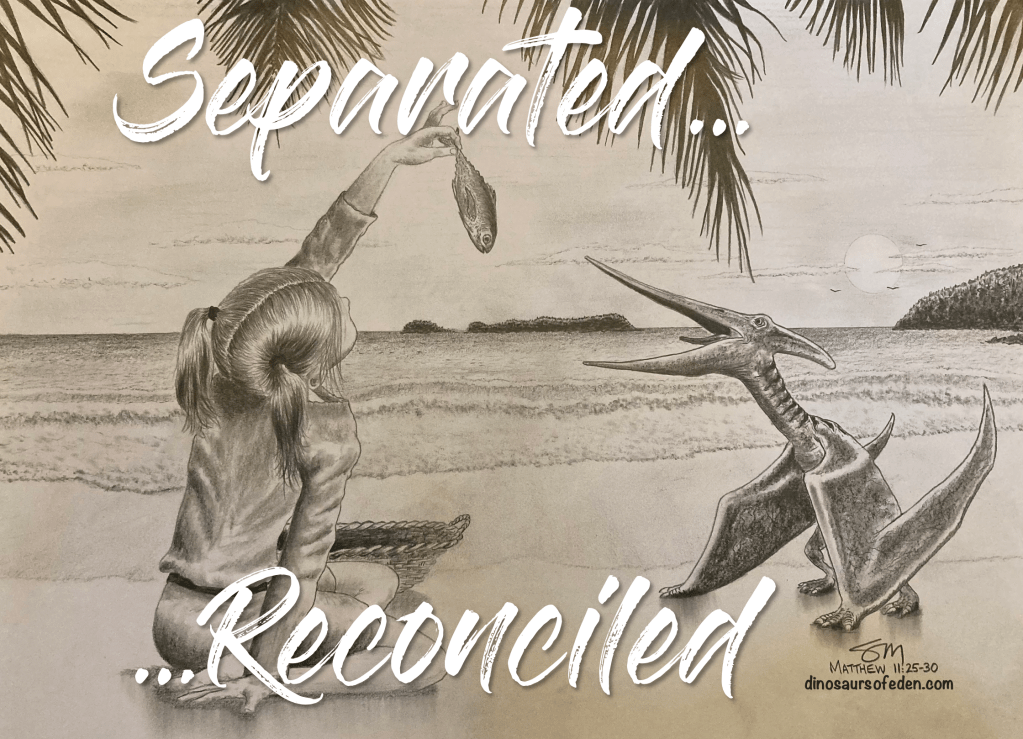
As descendants of Adam we are all born SEPARATED from God, with a sin nature and a tendency to go our own way. We are also created with a conscience, understanding right from wrong and the concept that actions have consequences — sin must be judged.
But God is compassionate and gracious, slow to anger, abounding in love (Psalm 103:8-13) and ready to forgive us if we repent and place our trust in him, because in love he himself bore the punishment for our sins on the cross (Isaiah 53:5-6). If we embrace the message of the cross we can be RECONCILED to God (2 Cor 5:18-6:2).
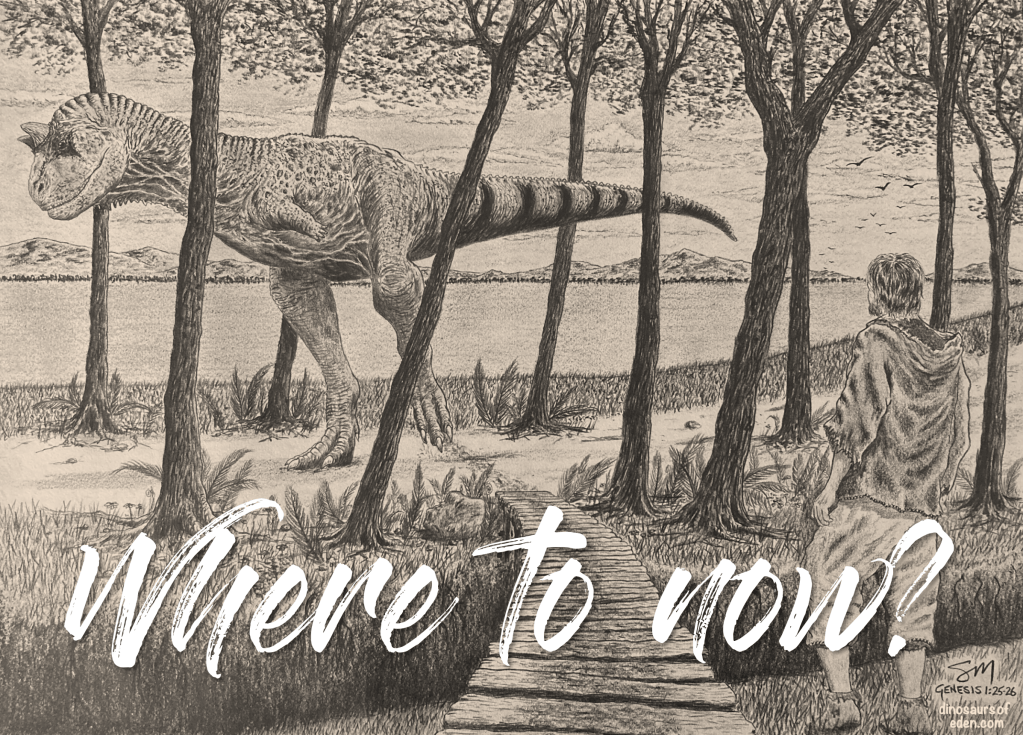
If you are open to exploring the Bible and seeking answers to the big questions of life — Where did we come from? Why are we here? Where are we going? — then please TAP HERE for a concise explanation of the Christian faith and prayerfully consider the invitation to respond.

Contact us
Steve Müller TEXT 0488 101 777 steve@homechurchgladstone.com

 Dinosaurs of Eden